

Start a stopwatch when somebody calls for initiative and stop it when the last enemy drops. Just over half of what you timed, about 55%, wasn’t the fight. It was rolling and adding, working out whose turn it is, looking up what the spell does, and the sentence “wait, what does that do again.” Of every hour a table spends in combat, about thirty-three minutes are that. The other twenty seven are the part everyone showed up for: the swing described, the goblin’s last words, the ranger deciding the balcony is a fine place to jump from.
That’s a big number, so it’s worth saying what it isn’t. Rolling and adding is the game (nobody wants a fight with no dice in it). It’s only a measurement of how much of the fight’s clock the mechanics take.
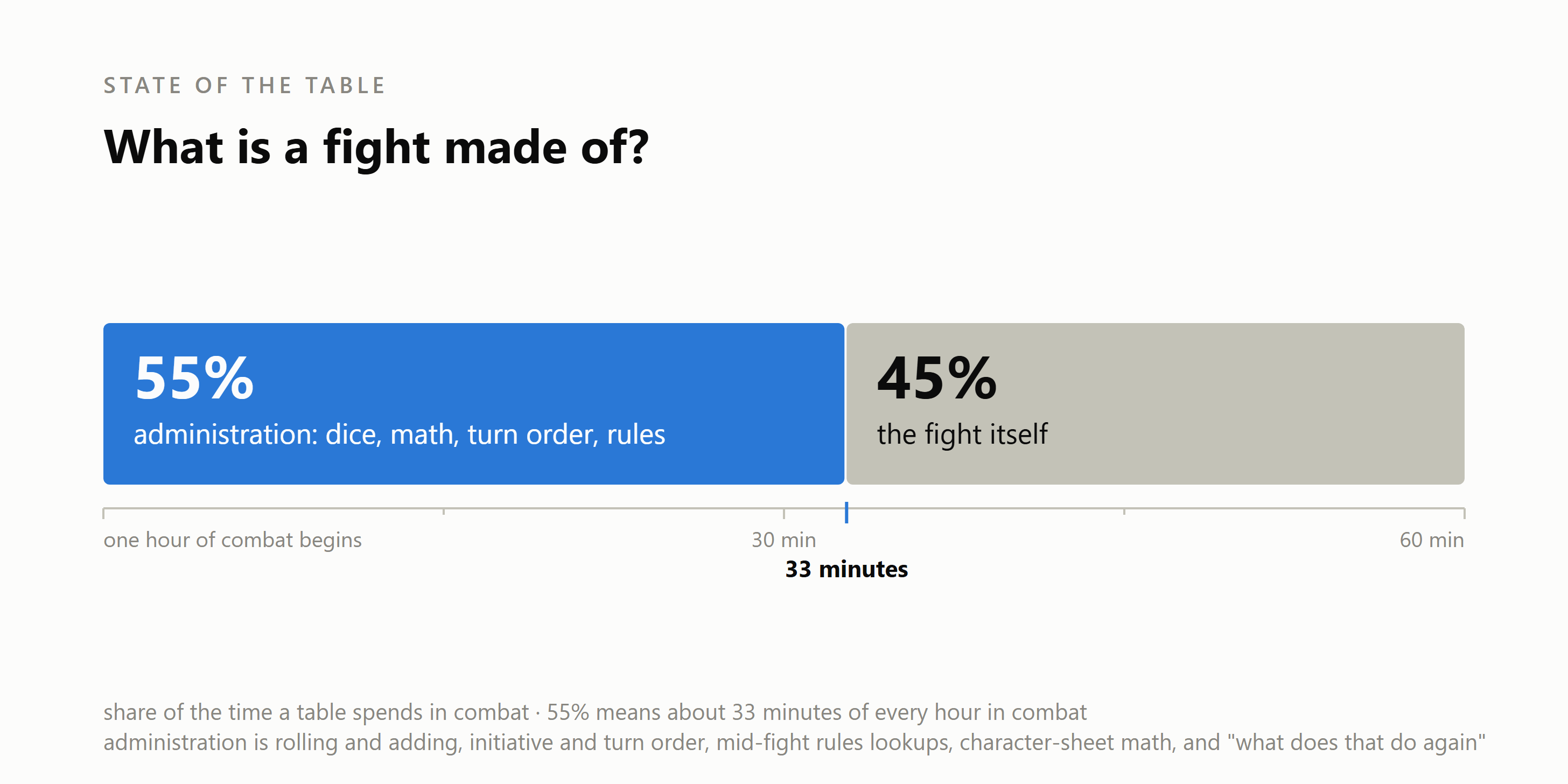
The share moves with the game system, in the direction the rulebooks would predict. Hold the same yardstick to the three biggest systems in the data and a Daggerheart fight carries about seven points less administration than a D&D fight, and about ten points less than a Pathfinder fight. Pathfinder sits a few points above D&D. None of that is a surprise to anyone who has played all three. Daggerheart has no initiative order to track and fewer numbers to add, and Pathfinder has three actions a turn and a condition for everything. What’s worth noticing is the size of the spread. Switching systems moves the paperwork by ten points at most. The other forty-five are the fight, whichever book is open.
In the 2000 Wizards of the Coast survey, it asked what people wanted to buy and 52% said software “to help manage game and speed up combat.” Well, the software arrived. Digital character sheets, initiative trackers, dice that roll and add themselves, whole tabletops on a screen. The fight is still half paperwork.