

Small tables fight less, and the first thing we suspected was the clock.
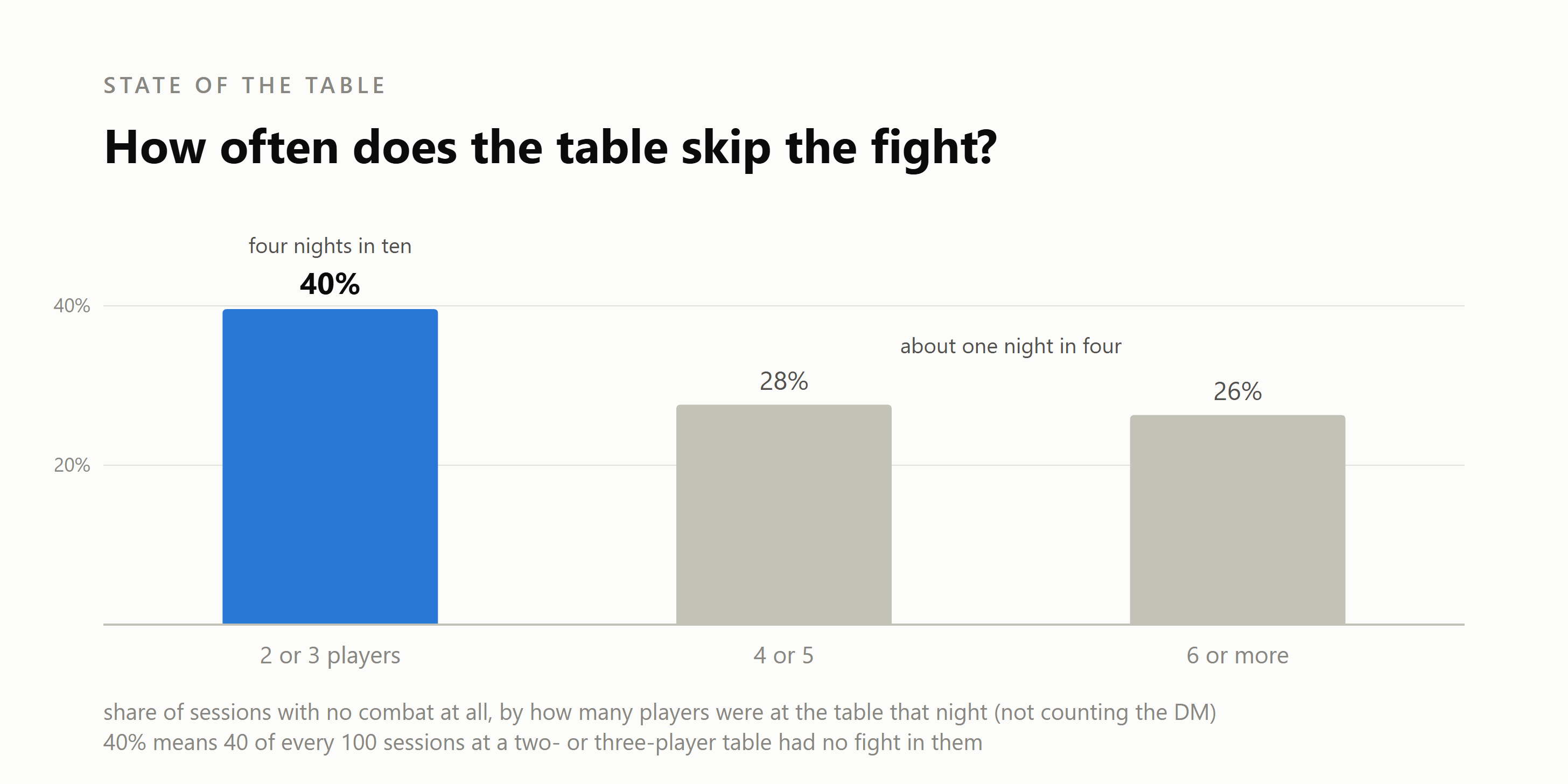
Count the players at the table that night, not the DM. A table with two or three players spends about 15% of the night in combat, a table with six or more spends about 22%, with four or five players in between at 20%. Put the other way round, the small table has no fight at all four nights in ten against about one night in four for tables of four or more. Most of the difference sits at the small end.
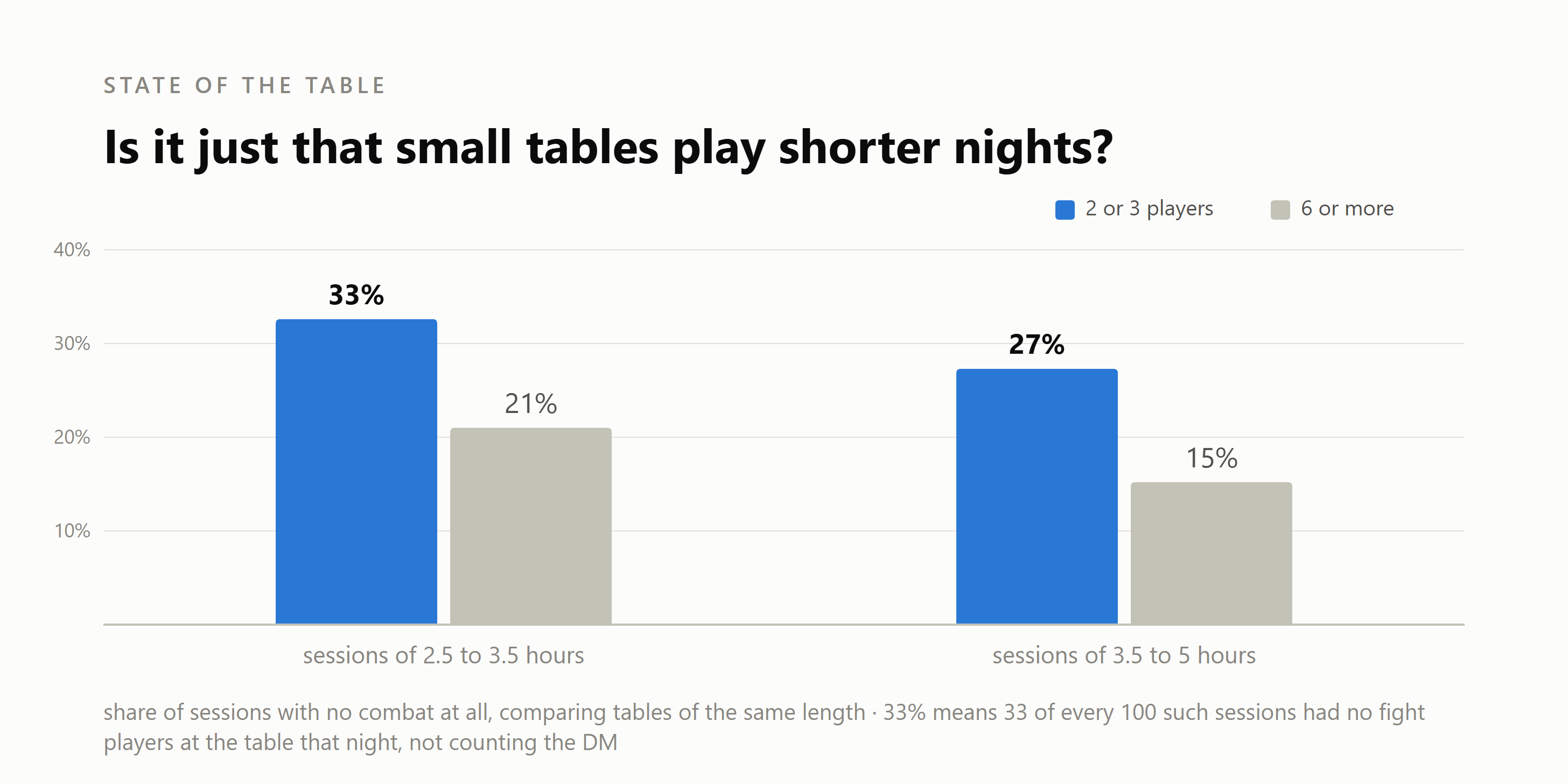
Hence the clock. Small tables play shorter nights (the typical two player session runs a little over two hours vs. six players, about three), and short nights skip the fight. So hold the length fixed. Among sessions of two and a half to three and a half hours, the small table has no fight 33% of the time and the table of six or more 21%. Among sessions of three and a half to five hours, 27% against 15%. The gap survives the clock, and it widens a little on the longer nights.
What the small table does instead is talk. A third of a two or three player nights is roleplay against a little over a quarter at a table of six or more (and that holds at matched lengths too). Our guess is spotlight. With two players, every scene is yours.. and a conversation with the innkeeper doesn’t have four people waiting for it to end. With seven, a fight is the one thing on the menu that gives everybody a turn.
And when the small table does fight, the fight is leaner. A fight with two players at the table carries about eight points less administration, of the kind we counted previously, than a fight with three or more. Add a fourth player, or a fifth, or a sixth, and that share doesn’t move again. Two is the only table size where the paperwork noticeably shrinks.