

Is D&D a combat game?
There has been a certain level of discussion and assumptions about this question since the beginning. A majority of source books and character sheets have to do with combat, don’t they?
In their landmark player survey in 2000, Wizards of the Coast reported 86% of players had played “combat oriented” games, a number based on what players have ever played, yes or no. A reasonable question for a survey but clearly limited in its scope.
Twenty-six years later, we looked at anonymized data from a set of ten thousand sessions to answer the question the survey could not: what actually takes up the hours of a session? (methodology described here)
Turns out, only about a fifth of them go to combat.
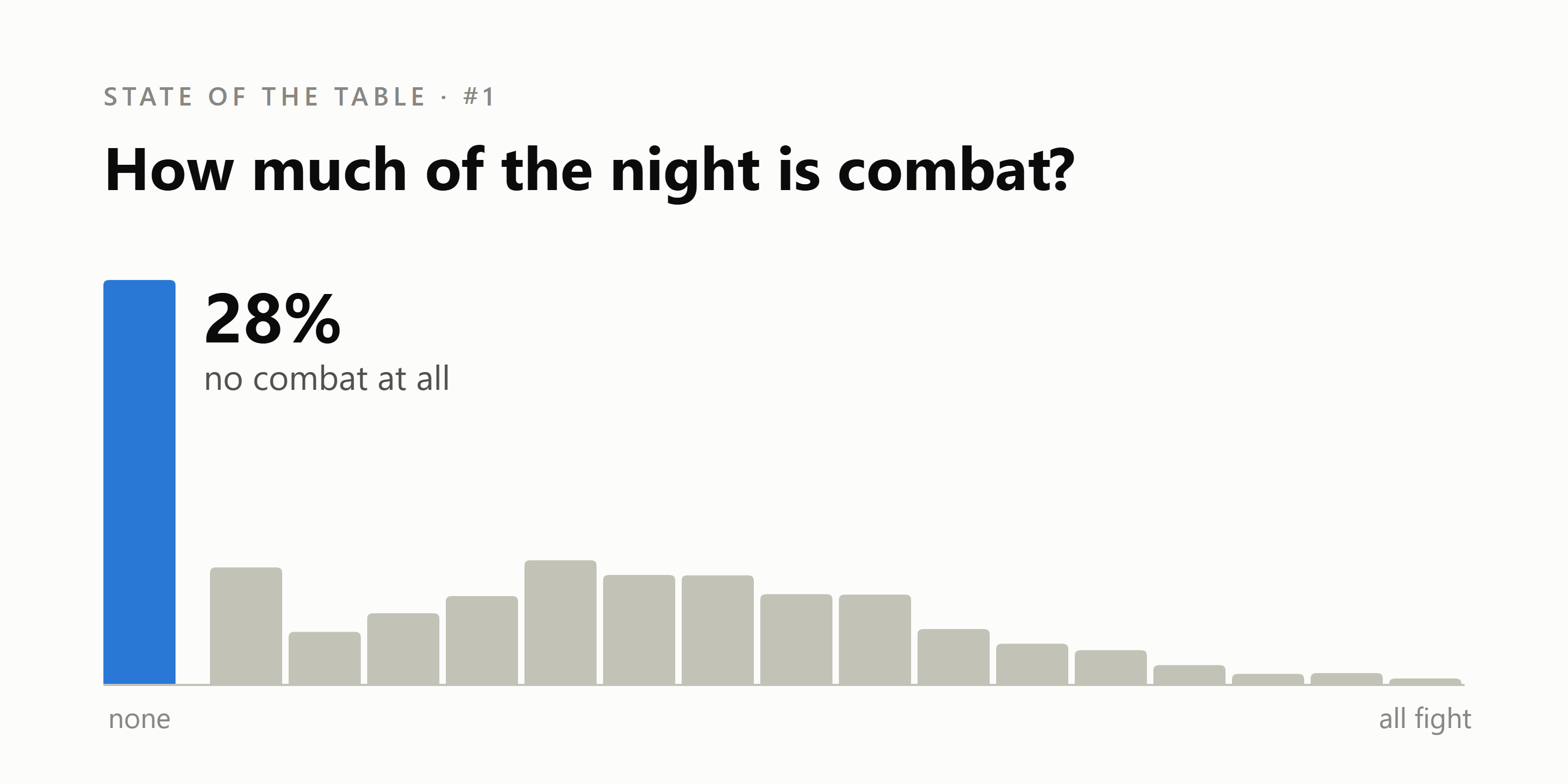
And 28% of sessions never roll initiative at all. Not a single fight. More than one night in four, the dice do plenty of work but none of it happens while in initiative order.
That said, both the survey answer and our findings can certainly be true at the same time, they are answers to different questions. ‘Have you ever played a combat oriented game?’ and ‘what did your table actually do last Tuesday?’ can both be answered honestly by the same player: one with a clear yes and the other with two hours of tavern scheming and a single Persuasion check.
This post starts a weekly series that aims to understand the nature and behaviors of TTRPG & D&D tables based on what they actually do… which nights skip the fight, what takes place instead, what fights actually look like, and even things like why the last bit of every night looks weirdly familiar across all tables. Some of it we hope will help people run better sessions and some of it we don’t fully understand yet, but are confident the community is filled with people smarter than us that perhaps can help fill in those gaps and work out the implications.
So, is D&D a combat game? While the rulebook is mostly combat rules, 28% of the time no one touches them.
To be honest, the result of this makes me happy - since even simple combat encounters generally take so bloody long in 5e that being able to do literally anything else in a session is more fun.
Also fights should be dramatic events rather than just shoved in everywhere for the sake of it to keep the murder hobos happy.